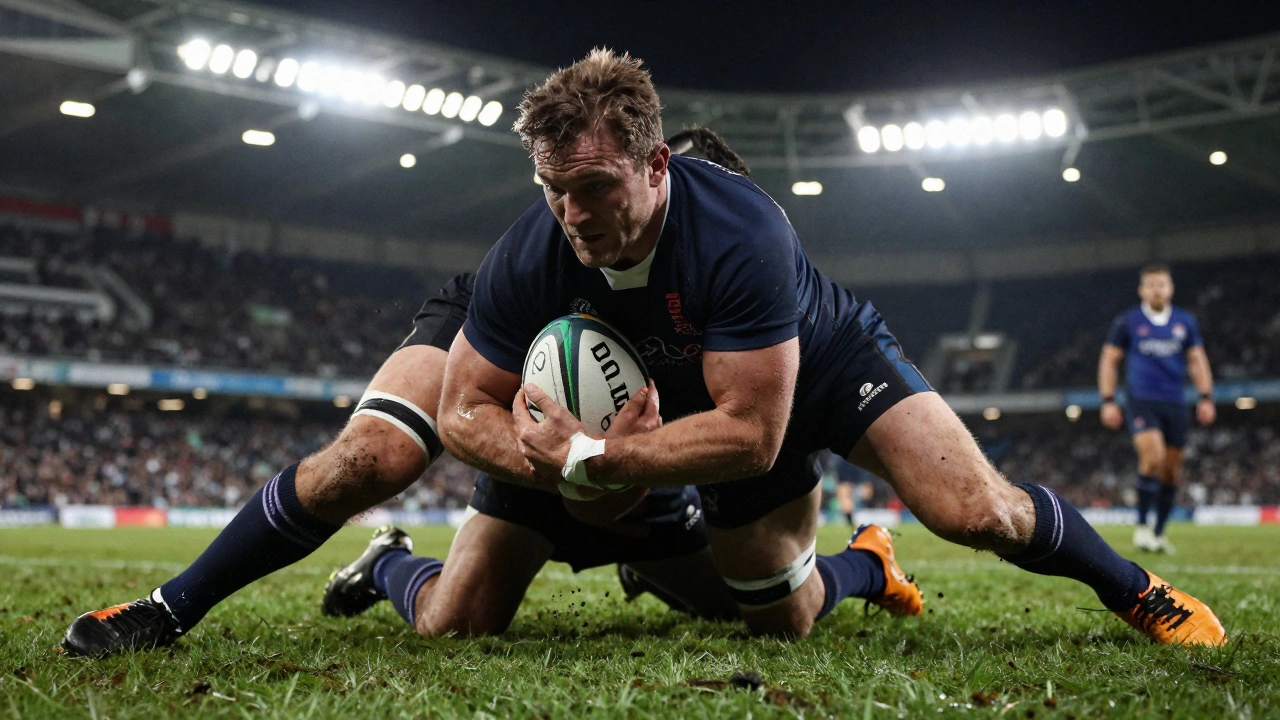
Rugby Fixtures April 27, 2026
Rugby Foul Play: A Guide to What's Not Allowed on the Pitch
Rugby Foul Play Knowledge Checker
Question 1/5
Score: 0
Loading question...
Match Result!
0/5
You're a rookie! Time to study the rulebook.
Quick Takeaways: The Big No-Nos
- No tackling above the shoulder line.
- No intentionally collapsing the scrum or maul.
- No "obstruction" or blocking players from reaching the ball.
- No dangerous play, such as tipping players or spear tackles.
- No offsides-staying behind the ball is the golden rule.
The Danger Zone: High Tackles and Head Contact
The most critical rule in the modern game is the protection of the head and neck. In rugby, World Rugby is the international governing body that sets the global laws of the game . They have a zero-tolerance policy on high tackles. If a player makes contact with an opponent's head or neck, the referee will almost always blow the whistle immediately.
A "high tackle" occurs when a defender's arms or shoulders make contact above the line of the shoulders. You'll often see players get a yellow card (sin bin) or a red card for this. Why? Because a hit to the chin or temple can cause concussions. The rule is simple: wrap your arms around the torso or thighs. If you go high, you're out. We've seen this in the Six Nations tournament, where a single mistimed high tackle can shift the momentum of an entire match and leave a team playing with 14 men for ten minutes.
The Dark Arts of the Scrum and Maul
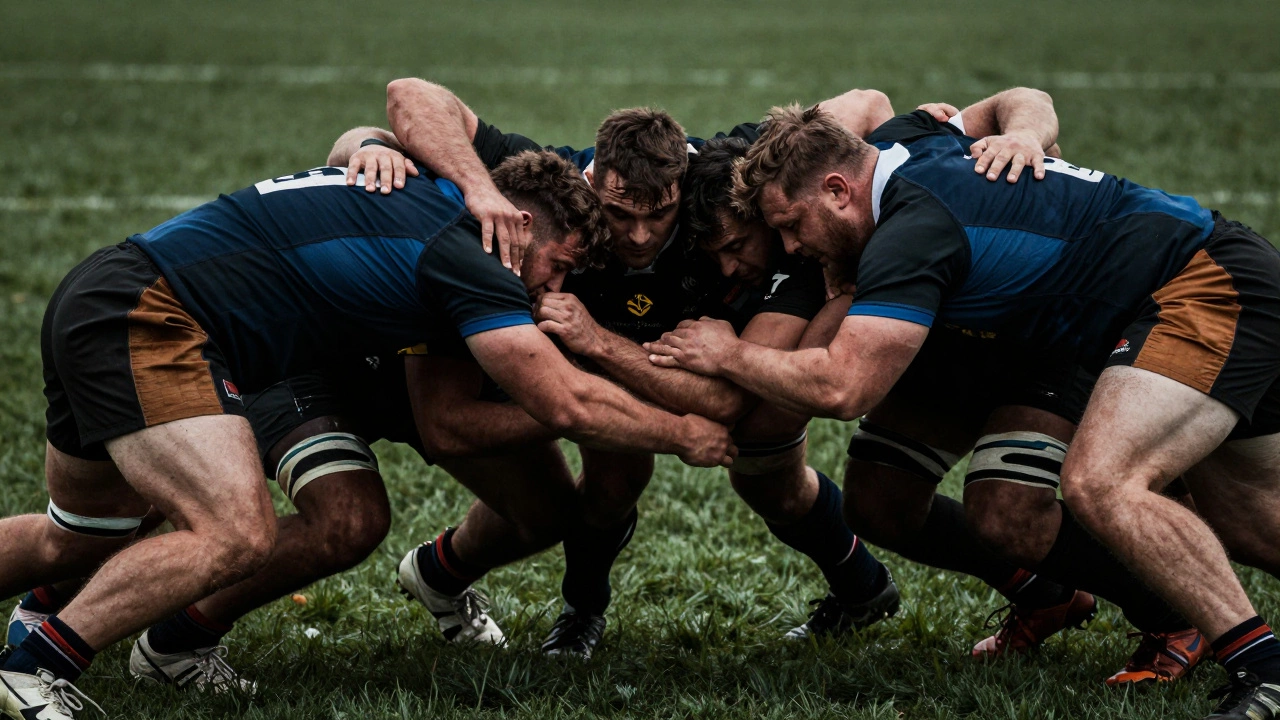
The Scrum is where the most technical fouls happen. It's a battle for territory, but there are strict limits on how you can fight for it. For starters, you cannot "collapse" the scrum. This happens when a player intentionally drops their weight or pushes at an angle to bring the whole structure down. It's dangerous because it can crush the players at the bottom.
Then there's the maul. A maul happens when one or more players from each team are bound together, and the ball is held. You cannot intentionally pull down a maul or "dive" into one. If you see a player launch themselves horizontally into a maul without binding, that's a penalty. It's effectively a human torpedo, and it's strictly banned to prevent spinal injuries.
| Foul Type | Example Action | Typical Penalty | Risk Level |
|---|---|---|---|
| High Tackle | Arm contact to the jaw | Penalty / Yellow / Red Card | High |
| Offside | Standing in front of the teammate who kicked | Penalty Kick | Low |
| Collapsing | Intentionally dropping in a scrum | Penalty / Yellow Card | Medium |
| Tipping | Lifting a player and dropping them on their back | Red Card | Critical |
The Offside Law: The Most Confusing Rule
If you ask any fan which rule is the hardest to follow, they'll say the offside law. In Rugby Union, you generally cannot be in front of the teammate who has the ball or the teammate who last kicked it. Imagine a line moving across the field; if you're "ahead of the play," you're offside.
The most common mistake happens during a kick. If a player kicks the ball downfield, any teammate who was in front of them at the moment of the kick must retreat or stay still until they are put onside. If they charge forward to tackle the receiver while offside, the referee will award a penalty. It sounds like a headache, but it's designed to stop the game from becoming a chaotic sprint where players just camp out behind the opposing team's line.
The Breakdown: Rucks, Mavericks, and Illegal Entries
Once a player is tackled to the ground, the game enters the "breakdown" phase. This is where a Ruck is formed. A ruck is basically a contest for the ball on the ground. But you can't just dive onto the ball like a hungry seal. You must enter the ruck from "the gate"-which means coming in straight from your own side, not from the side.
Coming in from the side is called "side-entry," and it's a frequent cause of penalties. Why does it matter? Because if you enter from the side, you're essentially bypassing the contest and unfairly disrupting the other team's attempt to secure the ball. Additionally, once you're in the ruck, you can't use your hands to pull the ball out unless you are the first person to arrive and you are on your feet. Hands in the ruck are a big no-no.
Dangerous Play and Unsportsmanlike Conduct
Beyond the technicalities, there are things that are just fundamentally not allowed because they are "dangerous play." One of the worst is the "tip tackle." This is when a player is lifted off the ground and then dropped or driven into the turf on their head, neck, or upper back. This is almost always an automatic red card because the risk of permanent injury is too high.
Then there is the concept of "obstruction." You can't just stand in the way of an opponent to block them from tackling your teammate. In American football, blocking is a strategy; in rugby, it's a foul. You must be actively involved in the play or stay out of the way. If you're just acting as a human wall, you're giving the other team a free penalty kick.
How the Referee Handles These Violations
The referee has a few ways to handle these rugby fouls depending on the severity. For minor things like accidental offsides or poor ruck entry, they might just give a penalty. The non-offending team gets to choose to kick the ball for territory, kick for goal (three points), or take a "scrum" to keep possession.
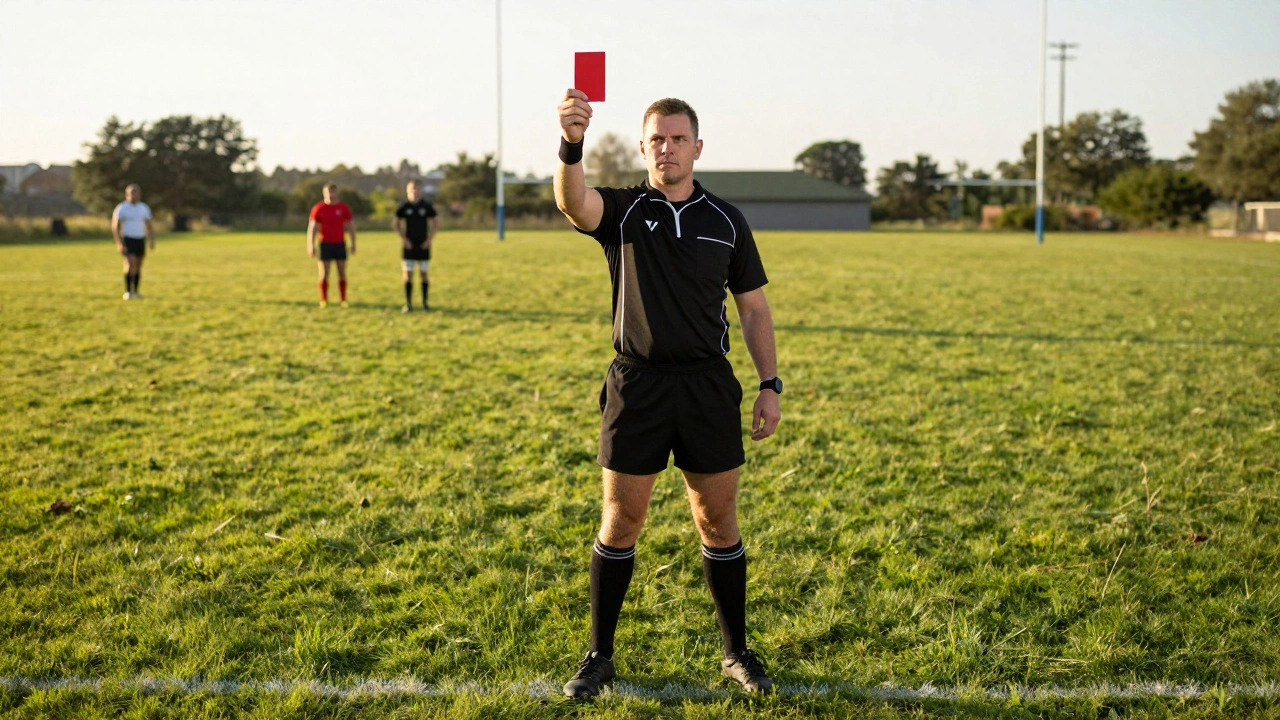
If the foul is intentional or dangerous, the referee uses cards. A yellow card means the player is sent to the "sin bin" for ten minutes. The team has to play a man down, which is a massive disadvantage. A red card is the ultimate penalty-the player is gone for the rest of the match. In some professional leagues, there is a "bunker system" where a separate official reviews footage to decide if a red card is warranted, ensuring the decision is based on clear evidence rather than a split-second guess.
Can you tackle a player around the neck?
No, tackling around the neck is strictly forbidden. Any contact that puts pressure on the neck or involves a "sling" motion that lifts the head is considered dangerous play and will result in a penalty or a card, depending on the force and intent.
What happens if a player is offside?
If a player is offside and interferes with play, the referee awards a penalty to the opposing team. If the offside is accidental and doesn't affect the game, the referee might simply tell the player to "retreat" and let play continue.
Is it allowed to push a player out of the way in a maul?
You can push as a collective unit within the maul, but you cannot "shoulder charge" or use illegal movements to push an individual player out of the way if it involves dangerous contact or breaking the bind.
What is the difference between a penalty and a scrum foul?
A scrum foul usually refers to technical errors like premature pushing or collapsing the scrum. A general penalty can happen anywhere on the pitch for any breach of the laws, including offsides and high tackles.
Why is "tipping" a player so serious?
Tipping occurs when a player is lifted and dropped on their head or back. Because the player has no control over how they land, the risk of cervical spine injuries is extremely high, which is why it almost always results in a red card.
What to Do When You're Learning the Game
If you're starting to play, don't let the complexity of the rules scare you. The best way to avoid penalties is to focus on two things: stay on your feet and keep your head down during tackles. If you aren't sure if you're offside, just back up until the referee tells you to stop. Most referees are quite patient with beginners and will explain why they blew the whistle.
For those moving into more competitive fixtures, studying the "breakdown" is where you'll find the most value. Learning how to enter a ruck through the "gate" and how to effectively bind in a scrum without collapsing will keep you on the pitch and out of the sin bin. Remember, rugby is a game of strength, but the laws ensure that strength is used safely.