Fitness May 11, 2026
Is It Too Late to Start the Gym? The Truth About Age and Fitness
New Gym Starter Fitness Planner
Your Details
Quick Safety Checklist
- ✓ Consulted doctor for medical clearance
- ✓ Prioritizing form over heavy weights
- ✓ Allowing extra recovery time (48-72 hours)
- ✓ Staying hydrated throughout the day
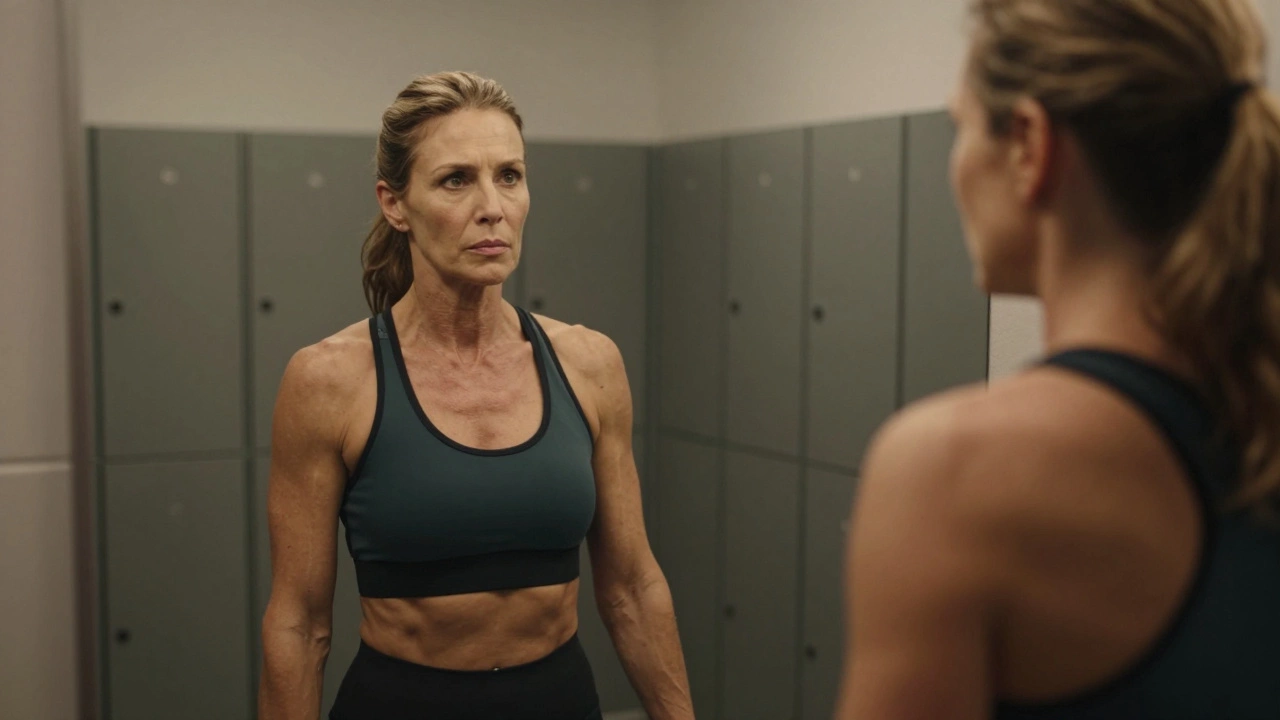
You stand in front of the mirror, looking at a body that feels like it belongs to someone else. Maybe you’re forty-five. Maybe you’re sixty-five. The question hanging in your head is simple but heavy: What age is late for gym? You worry you’ve missed the window. You fear being the oldest person in the room, or worse, injuring yourself because your joints aren’t what they used to be.
Here is the hard truth that might surprise you: there is no such thing as too old to start lifting weights, running, or moving with purpose. Science doesn’t support a cutoff date for physical improvement. In fact, starting later in life can offer benefits that younger people often ignore. The real question isn’t about age limits; it’s about how you approach the process when your body has more history behind it.
The Myth of the 'Prime' Window
We grow up hearing that our twenties are our prime years. We assume that if we didn’t build muscle or endurance then, we’re locked out forever. This belief is one of the biggest barriers keeping older adults on the couch. But biology tells a different story.
Your muscles respond to resistance training regardless of whether you’re twenty or eighty. A study published in the Journals of Gerontology a leading peer-reviewed journal focused on aging research showed that men and women in their seventies who started strength training gained muscle mass and strength comparable to those in their forties doing the same program. The rate of gain might be slightly slower due to hormonal changes, but the result is undeniable. Your body remains plastic. It adapts to stress. It gets stronger.
This concept is called neuroplasticity and myofibrillar adaptation. When you lift a weight, your brain sends signals to your muscles to contract. Over time, these pathways become more efficient. Simultaneously, the actual muscle fibers repair and thicken. This happens at any age. The only difference is recovery time. An eighteen-year-old might bounce back from a brutal leg day in twenty-four hours. At fifty-eight, you might need forty-eight or seventy-two hours. That’s not a limitation; it’s just data. Adjust your schedule, and you keep progressing.
Why Starting Later Is Actually an Advantage
If you’re reading this, you likely have something younger gym-goers lack: perspective. Younger athletes often train for aesthetics or ego. They push through pain, ignore form, and chase quick results. This leads to injuries that derail them for years. You, however, know better.
Older beginners tend to prioritize longevity over vanity. You want to pick up your grandkids without back pain. You want to climb stairs without gasping. You want to carry groceries without worrying about a slipped disc. These are powerful motivators. Motivation driven by function lasts longer than motivation driven by appearance.
Consider the mental health benefits. Depression and anxiety rates rise sharply after retirement or during mid-life transitions. Exercise releases endorphins and serotonin. It acts as a natural antidepressant. For many people starting the gym in their fifties or sixties, the mental clarity gained is worth more than the physical changes. You feel sharper. You sleep deeper. You handle stress with more resilience.
Safety First: How to Begin Without Injury
Starting late means you must start smart. You cannot jump into high-intensity interval training (HIIT) or heavy powerlifting immediately. Your connective tissues-tendons and ligaments-take longer to strengthen than muscles. If you rush, you risk tendonitis or strains.
Here is a practical checklist for your first ninety days:
- Get medical clearance. If you have been sedentary for years, see your doctor. Mention blood pressure, joint issues, or heart conditions. This isn’t about getting permission; it’s about gathering data. Know your baseline.
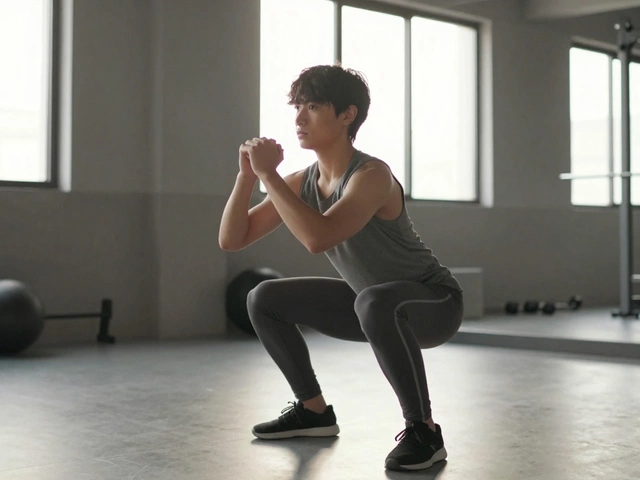
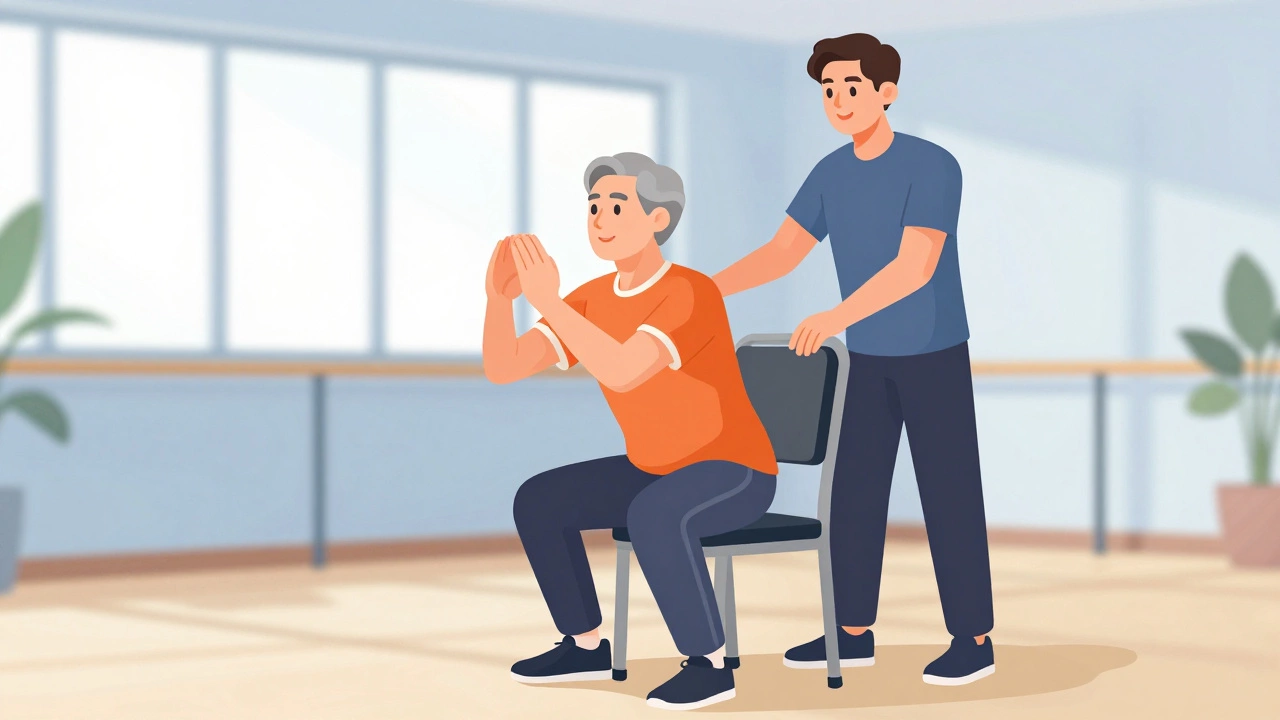
- Focus on mobility before intensity. Spend the first two weeks on walking, light stretching, and bodyweight movements. Learn to squat using a chair. Practice hinging at the hips. Master the movement patterns before adding load.
- Hire a trainer for the first month. This is non-negotiable if you can afford it. A certified personal trainer ensures your form is correct. Poor form with light weights causes more damage than good form with heavy weights. They will teach you how to breathe, brace your core, and move safely.
- Prioritize consistency over volume. Going three times a week for thirty minutes is better than going once a week for two hours. Consistency builds habit. Habit builds results.
Avoid the ego trap. Do not compare your Day One to someone else’s Year Ten. Everyone starts somewhere. The person next to you bench-pressing 200 pounds started with empty bars once upon a time. Respect the journey.
Types of Exercise for Older Beginners
Not all gym activities are created equal. Some are better suited for older bodies than others. Here is how to structure your routine based on safety and effectiveness.
| Exercise Type | Benefit | Risk Level | Recommendation |
|---|---|---|---|
| Resistance Training | Builds muscle, strengthens bones, prevents sarcopenia | Low (with proper form) | Start with machines or bodyweight; progress to free weights |
| Walking/Jogging | Improves cardiovascular health, low impact | Low | Begin with brisk walking; add jogging intervals gradually |
| Swimming | Full-body workout, zero joint impact | Very Low | Ideal for those with arthritis or knee pain |
| Yoga/Pilates | Enhances flexibility, balance, core strength | Low | Great for active recovery and mobility |
| Heavy Powerlifting | Maximal strength gains | High | Avoid until you have 6+ months of consistent training |
Resistance training is the cornerstone. As we age, we lose muscle mass-a condition known as sarcopenia the progressive loss of skeletal muscle mass and strength associated with aging. Lifting weights reverses this. It also strengthens bones, reducing the risk of osteoporosis and fractures. Aim for two to three sessions per week focusing on major muscle groups: legs, back, chest, and shoulders.
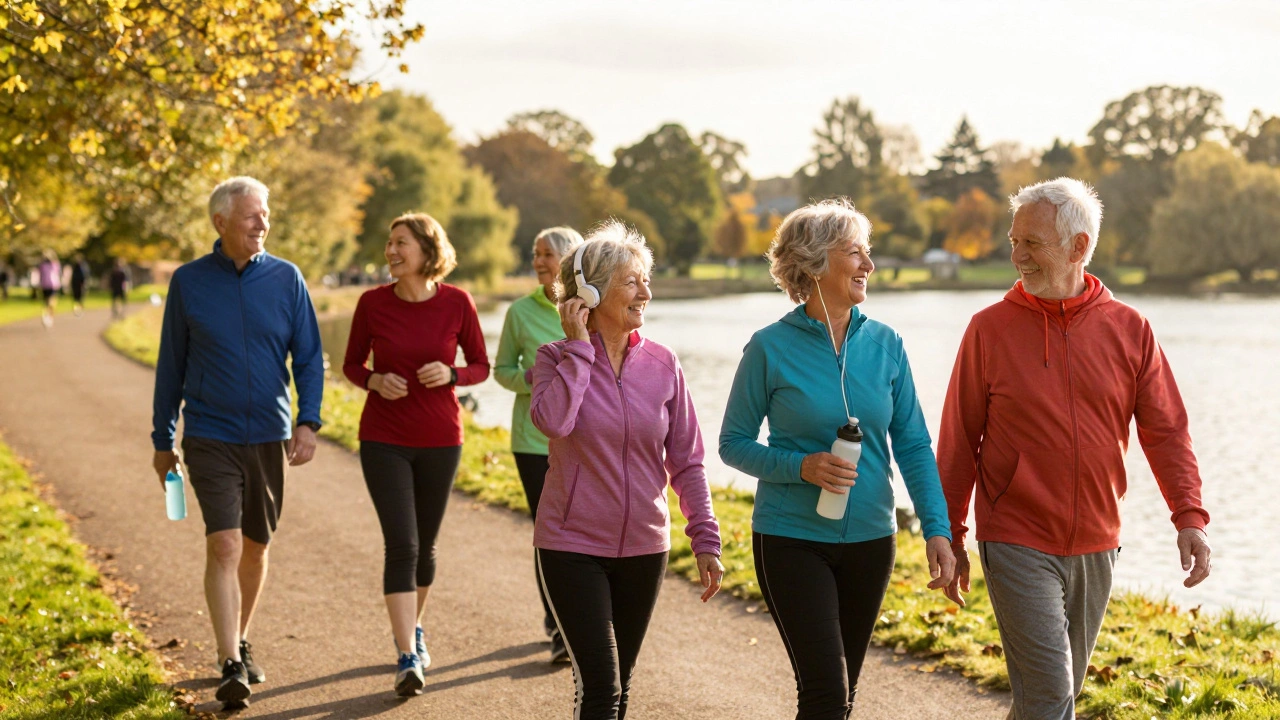
Cardiovascular health is equally important. Walking is underrated. It’s accessible, safe, and effective. Start with twenty-minute brisk walks daily. Gradually increase speed and duration. If you have knee issues, try cycling or swimming. These activities burn calories and improve heart health without pounding your joints.
Nutrition: Fueling an Older Body
You can’t out-train a bad diet, especially as you age. Metabolism slows down. Hormonal shifts make fat storage easier. Nutrition becomes your secret weapon.
Protein intake is critical. Older adults need more protein than younger adults to stimulate muscle growth. Aim for 1.2 to 1.6 grams of protein per kilogram of body weight daily. Include sources like chicken, fish, eggs, Greek yogurt, and lentils. Spread this intake across meals rather than consuming it all at dinner.
Hydration matters more than you think. Dehydration causes fatigue, dizziness, and poor performance. Drink water throughout the day. Don’t wait until you’re thirsty. Your thirst mechanism dulls with age.
Reduce processed sugars and refined carbs. These spike insulin levels and promote inflammation. Focus on whole foods: vegetables, fruits, healthy fats, and lean proteins. You don’t need expensive supplements. Creatine monohydrate is safe and effective for muscle retention, but consult your doctor before starting any new supplement.
Mental Barriers: Overcoming Self-Doubt
The gym can feel intimidating. You might worry about judgment. You might fear looking foolish. Let me tell you a secret: nobody is watching you. Everyone is focused on their own reflection, their own sets, their own struggles.
If you feel self-conscious, start with group classes designed for seniors or beginners. These environments are supportive and educational. Alternatively, go during off-peak hours. Early mornings or mid-afternoons are usually quieter. Use headphones. Play music that pumps you up. Create your own bubble.
Remember why you started. Write it down. Put it on your mirror. "I want to play with my grandchildren." "I want to hike the mountains." "I want to live independently." When motivation fades-and it will-read your list. Action precedes motivation. You don’t wait to feel like going. You go, and then you feel like continuing.
Realistic Expectations: What Can You Achieve?
Let’s manage expectations. You won’t look like a bodybuilder in three months. And that’s okay. The goal isn’t aesthetics; it’s function and health. Within twelve weeks, you will notice significant changes:
- Improved energy levels. You’ll feel less sluggish during the day.
- Better sleep. Physical exertion regulates circadian rhythms.
- Increased confidence. Mastering new movements boosts self-efficacy.
- Visible tone. Clothes may fit differently. Posture improves.
- Stronger bones and joints. Reduced pain and stiffness.
Progress is non-linear. Some weeks you’ll feel amazing. Others, you’ll feel stiff and tired. That’s normal. Listen to your body. Rest when needed. Push when ready. Consistency beats intensity every time.
Finding Community and Support
Exercise is social. Humans are wired for connection. Joining a gym or class creates accountability. You’re less likely to skip a session if you know someone expects you. Look for local clubs, walking groups, or online communities focused on fitness over fifty. Sharing experiences reduces isolation and increases adherence.
Tell your friends and family about your goals. Their support can be invaluable. Invite them to join you. Make it a shared activity. Walking together, cooking healthy meals, celebrating milestones-together makes it fun.
The Bottom Line
So, what age is late for gym? None. Zero. Never. Whether you’re forty, fifty, sixty, or beyond, your body is capable of change. The clock hasn’t stopped ticking, but it hasn’t run out either. Every rep, every step, every breath is an investment in your future self.
Don’t let fear dictate your choices. Don’t let stereotypes define your potential. Lace up your shoes. Walk through those doors. Start today. Not tomorrow. Not next Monday. Today. Your future self will thank you.
Is it dangerous to start weightlifting after age 60?
No, it is not dangerous if done correctly. Weightlifting strengthens bones and muscles, reducing fall risk. Start with light weights, focus on form, and consider working with a trainer initially. Always get medical clearance before beginning a new exercise regimen.
Can I still build muscle in my 50s or 60s?
Yes, absolutely. Muscle protein synthesis remains active throughout life. While gains may be slower than in youth, consistent resistance training combined with adequate protein intake leads to significant muscle growth and strength improvements at any age.
What type of exercise is best for beginners over 50?
A mix of resistance training, low-impact cardio (like walking or swimming), and flexibility work (like yoga) is ideal. Resistance training combats muscle loss, cardio supports heart health, and flexibility exercises maintain joint mobility and prevent injury.
How often should I go to the gym as an older beginner?
Aim for 3-4 days per week. Allow at least one rest day between strength sessions to enable recovery. Consistency is more important than frequency. Shorter, focused workouts are often more sustainable and effective than long, exhausting ones.
Do I need special equipment if I start late?
No special equipment is required. Bodyweight exercises, resistance bands, and light dumbbells are excellent starting points. Gyms offer machines that provide stability and guidance, which can be helpful for learning proper movement patterns safely.
Will exercise help with chronic pain or arthritis?
Yes, gentle movement often reduces chronic pain. Strengthening muscles around joints provides better support, decreasing strain. Low-impact activities like swimming or cycling are particularly beneficial for arthritis sufferers. Consult your doctor to tailor exercises to your specific condition.